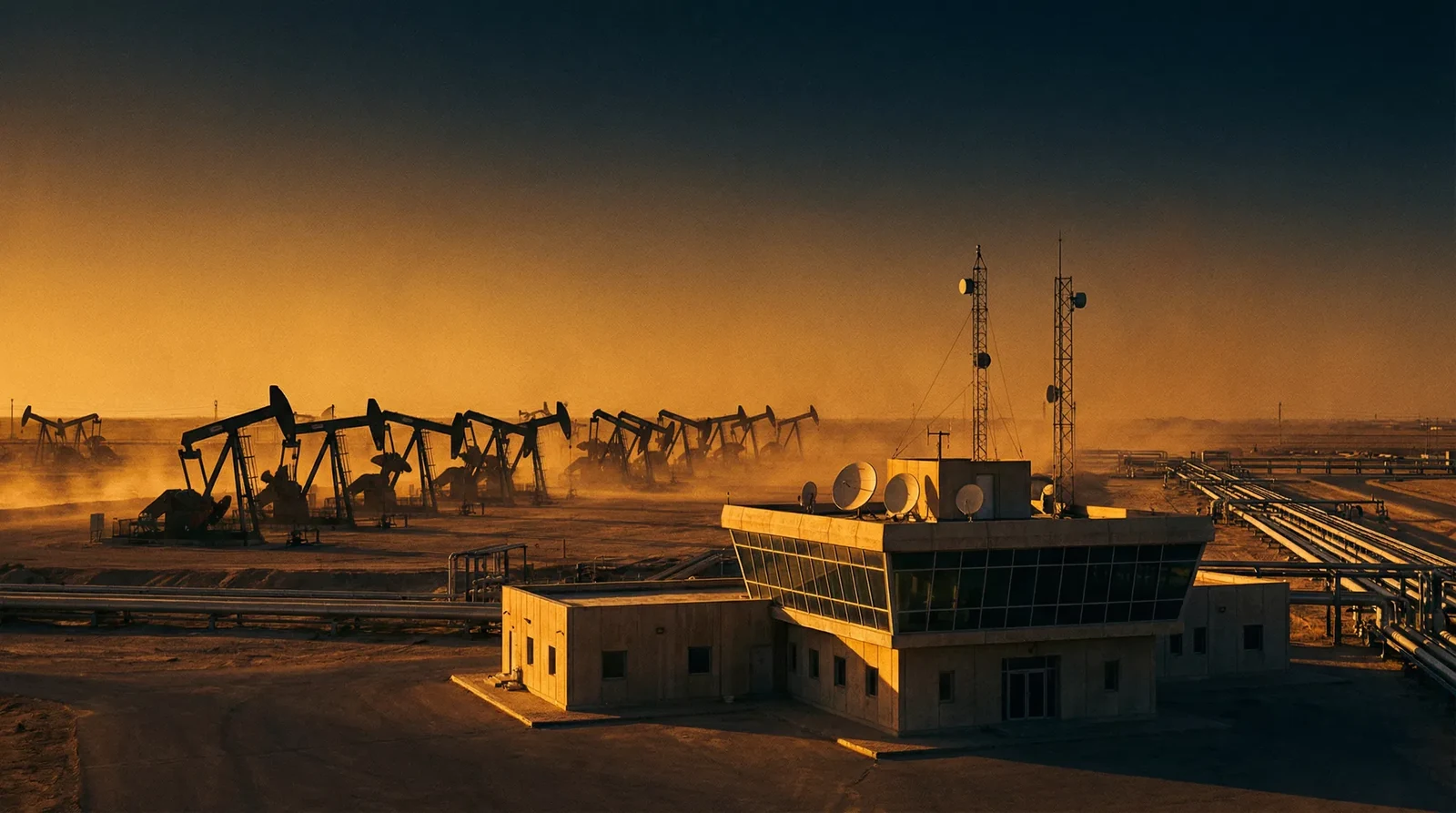
We found New Oil Field in 100 global cities and sites
IPXCOM · Energy infrastructure recovery
Rebuild what
operations
depend on.
Oilfield expertise. Field technology.
Infrastructure recovery.
From deteriorated oilfields to conflict-damaged facilities, restore visibility, reconnect the field and support a controlled return to service.
IPXCOM · INTRODUCTION
Watch the IPXCOM introduction
Dubbed narration follows the selected language; original mouth movements are retained. Subtitles are available in English, Español, العربية, Русский, Français and 中文(简体).
UN VSAT NETWORK · GLOBAL CONNECTIVITY
248 UN CTBTO Sites installed by IPXCOM with continued maintenance and support for 2026-2027
Completing 10th Year
Orange markers show the locations in IPXCOM’s supplied site data. The visualization is illustrative, not a live satellite or deployment-status feed.
IPX-03VSAT & HYBRID FIELD CONNECTIVITY
VSAT satellite networks.
Connect the field first.
Before recovery teams can coordinate, monitor and operate, they need a dependable communications path.
CONNECTIVITY FOR RECOVERY & REMOTE OPERATIONS
Reconnect oilfields, reconstruction sites and remote monitoring stations.
When terrestrial networks are damaged, unavailable or unreliable, IPXCOM integrates VSAT satellite backhaul with suitable fiber, wireless and cellular links. Connect field teams, voice services, SCADA telemetry and operational data while the wider infrastructure is restored.
01 VSAT satellite backhaul & remote-site networking
02 Hybrid links & appropriately designed backup paths
03 Field installation, local support & maintenance
Coverage, capacity, power, provider suitability and local licensing are confirmed for each site.
RECOVERY OVERVIEWENERGY RECOVERY & RESILIENCE · 10 INTEGRATED SOLUTIONS
The right technology.For every mission.For every location.
RESTORE PRODUCTION · REBUILD INFRASTRUCTURE · PROTECT WHAT COMES NEXT
IPXCOM Global Manpower is the first deliverable behind every recovery solution. Bring SCADA, protected communications, security, drones, AI, field sensors, pipeline rehabilitation, rapid-build facilities and resilient power into one coordinated oilfield and industrial recovery program.
ILLUSTRATIVE RECOVERY ARCHITECTURE--:--:-- UTC
SOLUTIONS10
DELIVERYGLOBAL
WORKFLOW6stages
LOCAL TECHNICIANS · IPXCOM · OEM / EPC PARTNERS
THE FOUNDATION OF EVERY TECHNICAL SOLUTION
IPXCOM Global Manpower.
Local technicians + IPXCOM engineering and integration + specialist OEMs + qualified EPC and mechanical partners. One coordinated delivery model across all nine recovery capabilities.
ONE COORDINATED RECOVERY PROGRAM
- Assess
- Stabilize
- Repair
- Reconnect
- Monitor
- Operate
ENERGY RECOVERY · INTEGRATED FIELD ARCHITECTURE
← SWIPE TO EXPLORE THE NETWORK →
SELECT A SOLUTION TO EXPLORE ITS ROLE · GLOBAL MANPOWER ENABLES ALL NINE RECOVERY CAPABILITIESILLUSTRATIVE ARCHITECTURE · NO LIVE PLANT DATA
Explore the solutions. Review the engineering. See the delivery.
Project scope, qualified partner responsibilities, vendor suitability, power, communications and local approvals are confirmed for each site.
01 DEFINE THE PROBLEM02 ENGINEER THE SOLUTION03 DEMONSTRATE DELIVERY
IPX-04THE RECOVERY CHALLENGE
Three different challenges.
One recovery architecture.
Start with the condition of the asset—not a product catalog. Identify what is damaged, what still works and what must happen first.
VENEZUELA01 / REHABILITATE
Deteriorated
oilfield infrastructure.
Deferred maintenance, aging pipelines, unreliable power and fragmented controls can leave operators without dependable visibility or a clear repair plan.
Assess usable equipment. Prioritize rehabilitation. Reconnect the field.
MIDDLE EAST02 / RECONSTRUCT
Conflict-damaged
critical infrastructure.
Physical disruption requires safe access, damage assessment, temporary services, integrity inspection and phased restoration of operational infrastructure.
Establish safe access. Restore critical services. Rebuild for resilience.
NEW DEVELOPMENT03 / CONNECT
New oilfield
infrastructure.
Connect the wellsite from drilling through production—integrating field instrumentation, SCADA, communications, security and operational data into a supported system.
Design the operating baseline. Connect the field. Support the next phase.
Qualified clearance and engineering specialists establish safe access and repair requirements. Technology integration supports—not replaces—their work.
IPX-05ELEVEN INTEGRATED SOLUTIONS
Technology that turns
findings into recovery.
Hybrid Technology Solutions for assessment, monitoring and repair. Select an offering to explore its scope and supporting technical material.
Damage Assessment, Asset Mapping & Inspection-to-RepairTurn field observations into a repair plan.
THE PROBLEM
Recovery teams lack a dependable baseline of damage, asset condition and repair priorities.
THE SOLUTIONRecovery starts with knowing what remains usable and what needs qualified attention. Combine authorized drone surveys, ground inspection and suitable visual, thermal, LiDAR or gas-detection imaging with GIS mapping and an asset register. Geolocate findings, retain supporting evidence and route priorities to the appropriate reviewer. Link approved findings to work orders and document repair closeout. Aviation, site-safety and engineering specialists establish access, flight requirements and technical judgments; IPXCOM integrates the information and field workflow.
RECOVERY OUTCOMEA geolocated asset baseline, reviewable repair priorities and documented closeout evidence.
IPXCOM data and workflow integration; qualified aviation, safety and engineering review.
Pipeline Leak Detection, Integrity & Verified RepairConnect suspected leaks to qualified repair.
THE PROBLEM
Leaks, corrosion and physical damage remain unresolved when detection is disconnected from field repair.
THE SOLUTIONBring pressure and flow monitoring, aerial or ground screening and qualified inspection into one repair workflow. Track suspected defects from location and confirmation through prioritization, specialist repair and verification. Fit the sensing method to the asset, operating conditions and available communications. IPXCOM connects monitoring, asset records and work orders so crews can act on the same evidence. Pipeline integrity judgments, welding, mechanical repairs and pressure testing remain with qualified specialists under the operator’s procedures.
RECOVERY OUTCOMEA traceable path from suspected defect to specialist-confirmed repair and verification.
Monitoring and repair-workflow integration; qualified pipeline and mechanical specialists perform integrity work.
SCADA, IoT & Remote Monitoring RecoveryRestore a usable view of dispersed assets.
THE PROBLEM
Operators cannot reliably see tank levels, pressure, flow, equipment status or alarms across remote sites.
THE SOLUTIONAssess serviceable instrumentation and restore the monitoring layer each site actually needs. Combine appropriate sensors, edge gateways and field communications with validated dashboards, alarms and maintenance workflows. Retain working equipment where practical and distinguish lightweight telemetry from full supervisory control and data acquisition. Design local buffering around intermittent backhaul and define who owns each reading and response. Qualified operational-technology specialists govern control-system changes, while IPXCOM integrates connectivity, data transport and the operator-facing monitoring infrastructure.
RECOVERY OUTCOMEValidated field readings and alarms connected to named operators and maintenance workflows.
Monitoring infrastructure and connectivity integration; operator-approved OT specialists govern control changes.
Protected Fiber & Resilient Field CommunicationsReconnect the field with maintainable links.
THE PROBLEM
Cable cuts, failed terrestrial service and isolated sites interrupt field coordination and operational visibility.
THE SOLUTIONConnect well pads, pump stations, tank farms and operating facilities using protected fiber and suitable satellite, microwave, private LTE or radio links. Route surveys guide buried cable protection, crossings and physically separate backup paths where justified. Match the network to voice, monitoring and operational-data requirements rather than one connection type. IPXCOM’s integration and supply-chain scope can include field coordination, optical testing and handover records; qualified installation providers and engineers determine site-specific civil works and protection requirements.
RECOVERY OUTCOMEDocumented field communications with appropriate backup paths and maintainable handover records.
Network integration and supply-chain coordination; qualified providers deliver site-specific civil works.
Cyber-Resilient IT/OT & Operational Data RecoveryRebuild access, records and recoverability.
THE PROBLEM
Legacy access, flat networks, missing records and unreliable backups undermine infrastructure recovery.
THE SOLUTIONRecover operational information alongside the systems that carry it. Separate business IT from production OT, control remote access and establish recoverable configurations and backups. Reconnect asset registers, historian data, engineering documents and maintenance records under clear ownership. Plan local operating resilience together with any cloud services, so field teams understand what remains available when links fail. IPXCOM integrates the infrastructure and data-recovery workflow; operator-approved IT and OT specialists manage security policy, access decisions and production-system changes.
RECOVERY OUTCOMEOwned operational records, controlled access paths and an agreed system-recovery baseline.
Infrastructure and data-recovery integration under operator-approved IT/OT security and change control.
AI-Assisted Intelligence & Maintenance WorkflowsPrioritize evidence. Keep people accountable.
THE PROBLEM
Separated sensor, camera, drone and maintenance data leave teams with alarm overload and weak prioritization.
THE SOLUTIONUse bounded analytics to connect available field data with the decisions recovery teams need to make. Correlate sensor trends, imagery and maintenance information to surface candidate anomalies with location, history and supporting evidence. Start with one defined asset group or workflow, a named decision owner and agreed measures. Route approved findings into work orders and retain the outcome. Human operators and qualified engineers make consequential decisions; the AI layer provides advisory analysis without changing safety-critical controls.
RECOVERY OUTCOMEEvidence-backed priorities routed to human decision owners and recorded maintenance actions.
Advisory analytics and workflow integration; human operators and engineers retain consequential decisions.
Security, Thermal Surveillance & Site AwarenessGive operators a clearer view of priority sites.
THE PROBLEM
Dispersed or damaged facilities lack dependable visibility into intrusion, abnormal activity and warning events.
THE SOLUTIONIntegrate suitable fixed, pan-tilt-zoom, thermal or low-light cameras with secure backhaul, local recording and an operator-led monitoring workflow. Prioritize the facilities and viewpoints that matter to recovery, then design camera power, communications and retention together. Configured analytics can draw attention to relevant footage and warning events. IPXCOM integrates the surveillance infrastructure and event workflow; people verify alerts, while the operator and qualified security personnel determine response arrangements and site procedures.
RECOVERY OUTCOMERecorded site visibility and reviewable alerts connected to an operator-led response workflow.
Camera, backhaul and monitoring integration; operators and qualified security personnel verify and respond.
Resilient Distributed Power & Gas-to-Power IntegrationDesign power around the loads that matter.
THE PROBLEM
An unreliable or damaged grid leaves communications, monitoring and operating facilities without dependable power.
THE SOLUTIONDefine actual loads before selecting solar, battery storage or conventional generation. Communications nodes, cameras, monitoring and field offices need a different design from large industrial equipment. Where fuel quality, engineering and economics support it, qualified generation specialists can evaluate turbines, reciprocating generation or associated-gas utilization. IPXCOM’s role can include monitoring, connectivity and site coordination, bringing power status into the recovery workflow. Qualified electrical and generation providers retain responsibility for power-system engineering, installation and acceptance.
RECOVERY OUTCOMEA site-specific power scope matched to critical loads and assigned engineering responsibilities.
Project-specific engineering brief available on request
Rapid-Build Operations Facilities & Equipment SheltersCreate practical bases for recovery work.
THE PROBLEM
Recovery teams lack usable control rooms, field offices, communications shelters or maintenance bases.
THE SOLUTIONDefine the operating requirements for field offices, control rooms, communications shelters and maintenance bases before construction. Suitable modular or structural insulated panel facilities can bring power, cooling, connectivity, monitoring and security into one coordinated site design. IPXCOM integrates the technology infrastructure and operating interfaces so accepted systems can be supported in the field. Qualified structural engineers and construction providers determine site preparation, building design, approvals and physical delivery for the chosen facility approach.
RECOVERY OUTCOMEA coordinated facility scope linking the building, critical services and operating requirements.
Project-specific engineering brief available on request
Local Workforce, Field Maintenance & Lifecycle SupportMake local support part of the recovery design.
THE PROBLEM
Restored systems deteriorate again when trained personnel, spares, records and response arrangements are missing.
THE SOLUTIONBuild local recruitment, training and preventive maintenance into the recovery program from the start. Combine local technicians with IPXCOM engineering, remote support and qualified specialists to maintain accepted communications, monitoring and site systems. Define ownership, escalation routes, available spares and work-order closeout for each installation. Training can cover field data handling, basic maintenance and security observation within agreed roles. Operators and qualified specialists retain safety procedures, certifications and operational approvals throughout the system lifecycle.
RECOVERY OUTCOMENamed maintenance ownership, trained local support and documented escalation and closeout arrangements.
Local technical training and system support; operator and specialists retain safety and operational approvals.
Telecom Tower ConstructionBuild and upgrade the infrastructure that connects the field.
THE PROBLEM
Remote and recovering sites need tower infrastructure, working cell-site equipment and qualified field crews to establish dependable communications.
THE SOLUTIONBring telecom tower construction and upgrades, turnkey cell-site solutions and local tower services into the communications scope. Coordinate tower equipment, field connectivity and ongoing support with site-specific engineering and qualified providers. Monopole, self-supporting and guyed-wire configurations are selected around the site’s loading, foundations and approvals.
RELEVANT FIELD EXPERIENCEIn 2012, IPX completed 100 tower upgrades for Ericsson and Bechtel, upgrading 2G/3G networks to LTE with five crews. The supplied presentation states a 100% safety record for that project and 7x365 crew operation until completion.
Project-specific structural, rigging, electrical, permitting and safety responsibilities remain with appropriately qualified providers.
THE RECOVERY WORKFLOW
Inspect. Act.
Verify. Keep operating.
01
Assess
Establish the asset baseline.
02
Stabilize
Restore critical site services.
03
Repair
Coordinate qualified specialists.
04
Reconnect
Recover communications and data.
05
Monitor
Validate alarms and visibility.
06
Operate
Maintain locally supported systems.
IPX-06PAST & PRESENT PERFORMANCE
Field experience.
Relevant to the mission.
Communications, integration and sustainment experience across energy, government and remote infrastructure.
Howard County Broadband Supply Chain
Howard County BTOP broadband program
IPXCOM’s Howard County experience centers on equipment procurement, warehousing, staging and logistics for the BTOP broadband program. The role connects supplier coordination with the practical movement of infrastructure equipment into a public network project. It demonstrates supply-chain delivery relevant to rebuilding field communications, with procurement and logistics responsibilities distinct from the overall design and construction of the broadband network itself.
Read IPXCOM project accountBaghdad Reconstruction Communications
DynCorp, Parsons, Louis Berger Group and US Air Force
In conflict-disrupted Baghdad, IPXCOM’s communications work combined VSAT, structured cabling, networking, voice and paging with backup power and local technical support. The case study names DynCorp, Parsons, Louis Berger Group and the US Air Force among organizations served. This experience brings together temporary connectivity, operating infrastructure and field support in conditions relevant to phased reconstruction and coordination of recovery teams.
Read IPXCOM project accountBlue Force Tracking Satellite Support
Northrop Grumman, Comtech and ViaSat
IPXCOM reports satellite earth-station installation and technical support for Blue Force Tracking through Northrop Grumman, Comtech and ViaSat. Its contribution is communications deployment and sustainment within a wider military system, rather than ownership of the tracking program. The account also describes supplier recognition. The relevant recovery capability is installing and supporting mission-critical satellite infrastructure alongside established prime contractors and partners.
Read IPXCOM project accountAfrica Oilfield & Regional Networks
Addax, Trafigura, Shell/Vivo, BOAD and African Development Bank
IPXCOM’s Africa portfolio describes towers, VSAT, enterprise communications and field support involving Addax, Trafigura, Shell/Vivo, BOAD and the African Development Bank. These accounts show communications infrastructure connecting energy operations and regional organizations with local technical support. Shell/Vivo support is described as ongoing in the company’s portfolio. The experience is relevant to field-network restoration and maintainable delivery across dispersed operating locations.
Read IPXCOM project accountProject accounts are published by IPXCOM. Relevant prior experience does not imply that every proposed recovery service has already been delivered.
View the full performance record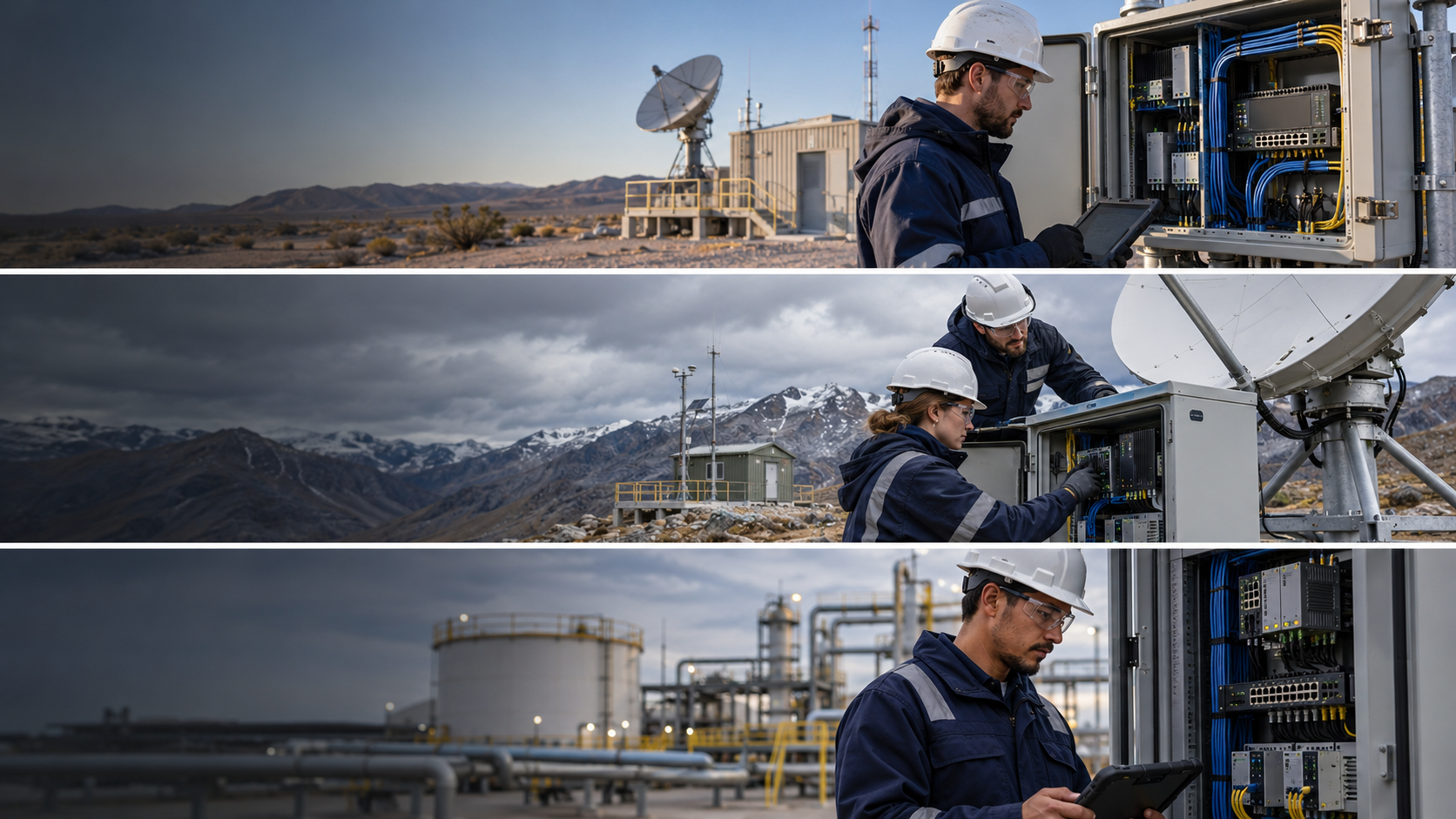 FIELD ENGINEERING · LOCAL DELIVERY
PEOPLE ARE THE CRITICAL LAYER
Built to work.
Supported to last.
Technology alone does not restore an oilfield. Local technicians, qualified repair teams, spares and clear operating responsibilities make recovery sustainable.
01 Local workforce & training
02 IPXCOM engineering & integration
03 Specialist delivery & remote support
Define the scope. Build the right solution.
Start with
the site.
What is damaged? What remains operational? What needs to be restored first? Whether you are starting or expanding a new development, restoring production in Venezuela, or rebuilding damaged infrastructure in the Middle East and Ukraine, talk to our team about the next practical step.
IPXCOM reports a network of more than 100 engineers supporting locations worldwide; project coverage and specialist roles are confirmed for each engagement.