
CLIENT
Lagos State Government
Emergency Management & Public Safety Agencies — Nigeria State Police Force, Lagos State Fire Service, LASAMBUS (ambulance), and LASTMA (traffic management).
THE CHALLENGE
Rapid population growth in a dense megacity — 20M+ residents
Fragmented emergency response across police, fire, medical, and traffic agencies
No centralized dispatch or coordination platform
High incident volume with severely limited infrastructure
24×7 reliability with zero downtime tolerance required
ORIGIN
The First Call Center in Nigeria.
IPXCOM Got the Call in 2007.
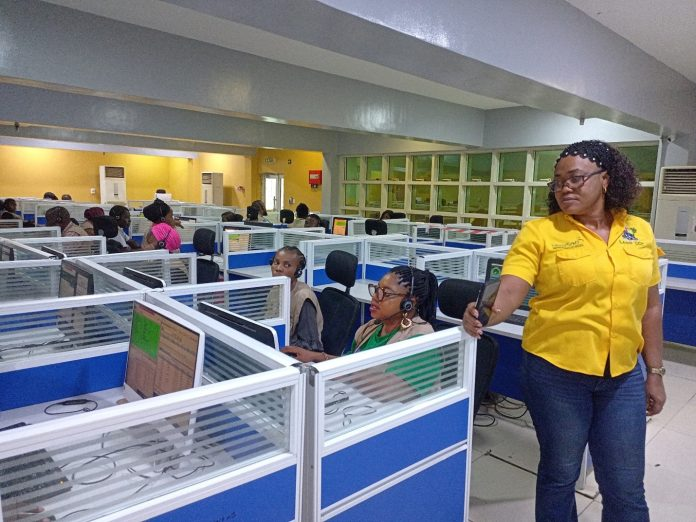
In 2007, shortly after assuming office, Governor Babatunde Fashola launched the Lagos State emergency response initiative centered on the 767 call center — marking a turning point in public safety management for Lagos State. Prior to this, emergency response across Lagos was fragmented, with limited coordination between police, fire, and medical services.
The introduction of a single, memorable emergency number — 767 (alongside 112) — created a unified entry point for citizens to report incidents and request immediate assistance. IPXCOM was called in to install the first call center services in Nigeria. With its local partner, IPXCOM installed the call center and trained all agents to operate the modern VOIP Call Center with databases and analytics covering all aspects of customer interactions.
IPXCOM SOLUTION
Carrier-Grade. High-Availability.
Engineered for Zero Downtime.
OPERATIONAL IMPACT
Real-World Outcomes at City Scale.
Rapid Response
Coordinated emergency dispatch often within minutes of call intake — police, fire, medical, and traffic in a single unified system.
Centralized Visibility
All emergency services operate from a single command view — real-time incident tracking across the entire 20M+ population megacity.
Public Confidence
Citizens became more willing to report incidents knowing a coordinated response was in place — measurable decline in opportunistic crime.
Data-Driven Policing
The 767 system laid the foundation for data-driven public safety management and subsequent investments in surveillance and security infrastructure.
LONGEVITY & SYSTEM EVOLUTION
Unlike Most Infrastructure Deployments — This One Lasted.
The Lagos 767 system has remained continuously operational for over a decade — expanded and upgraded by the government, and evolved into a modern Command & Control Centre. The Lagos State Government continues to upgrade the center's infrastructure, incorporating modern ICT tools, data analytics, and automation to improve response time and efficiency.
IPXCOM installs Nigeria's first call center. 767 / 112 unified emergency number launched under Governor Fashola.
System scales to handle millions of calls annually. Multi-agency dispatch integration expanded.
VMware server upgrades and cyber-secure technology refresh delivered by IPXCOM.
15M+ emergency calls in 11 months. 11,000+ verified incidents managed. System still fully operational.
"IPXCOM helped establish one of Africa's largest emergency communication platforms — still operating today, handling tens of millions of calls annually and coordinating real-time response across a 20+ million population megacity."
IPXCOM Engineering Library · ENG-LIB-2026-015 · Lagos State 767 Case Study
READY TO DISCUSS YOUR REQUIREMENTS?
Mission-Critical Infrastructure
Engineered to Last.
Talk to IPXCOM engineers about emergency communications, public safety platforms, or any mission-critical infrastructure requirement.