Rebuilding the Caspian.
After the Soviets Left.
In 1996, IPXCOM's principal deployed into Azerbaijan and Georgia with Frontera Resources — restoring power, communications, and data infrastructure to oilfields abandoned by a collapsing empire. Five years. Two countries. Zero incidents.
THE SITUATION
What the Soviets Left Behind
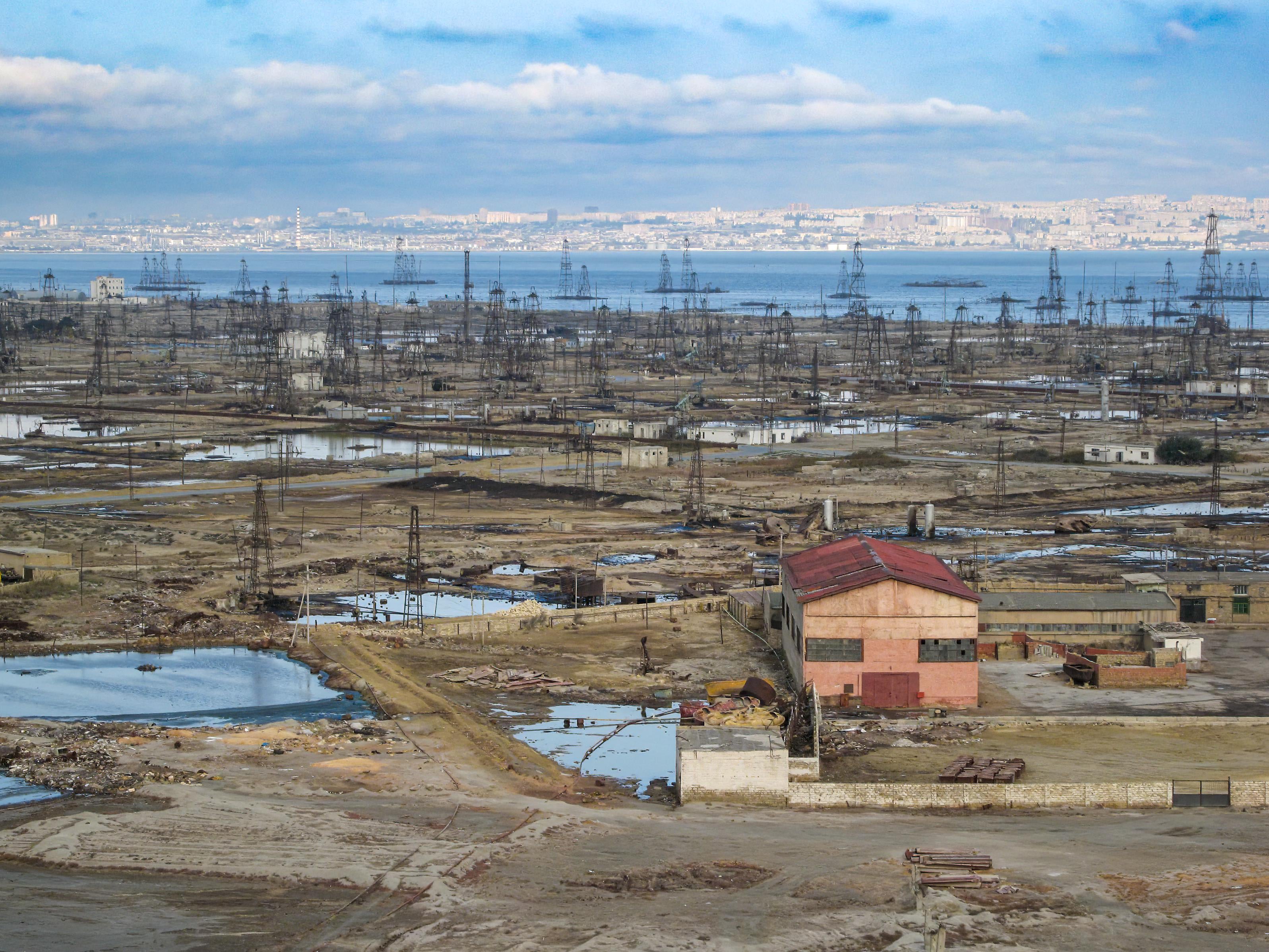
When the Soviet Union collapsed, the departing forces stripped power lines bare — taking the copper wire and leaving entire regions without heat or electricity in the depths of Caucasus winters. The oilfields of Azerbaijan's Absheron Peninsula were active but operating on crumbling infrastructure: communications unreliable, telemetry manual, critical geological data locked in paper archives.
At the same time, the 1994 "Contract of the Century" had opened Azerbaijan to Western energy companies — bringing urgency and expectations for modern, real-time operations. Georgia, under President Eduard Shevardnadze, was emerging as the critical transit corridor linking the Caspian to global markets. The region was stabilising politically, but infrastructure was inconsistent at best.
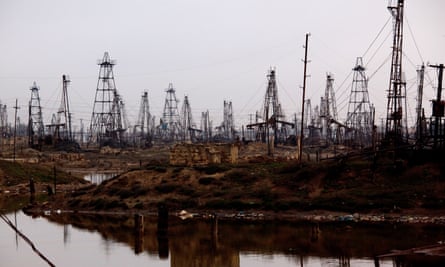
Environmental disasters compounded the challenge — decades of Soviet-era extraction had left the Absheron Peninsula among the most polluted places on earth, with oil-saturated soil, contaminated groundwater, and abandoned derricks stretching to the horizon. Rehabilitation meant not just restoring operations, but doing so responsibly in a landscape that had been systematically destroyed.
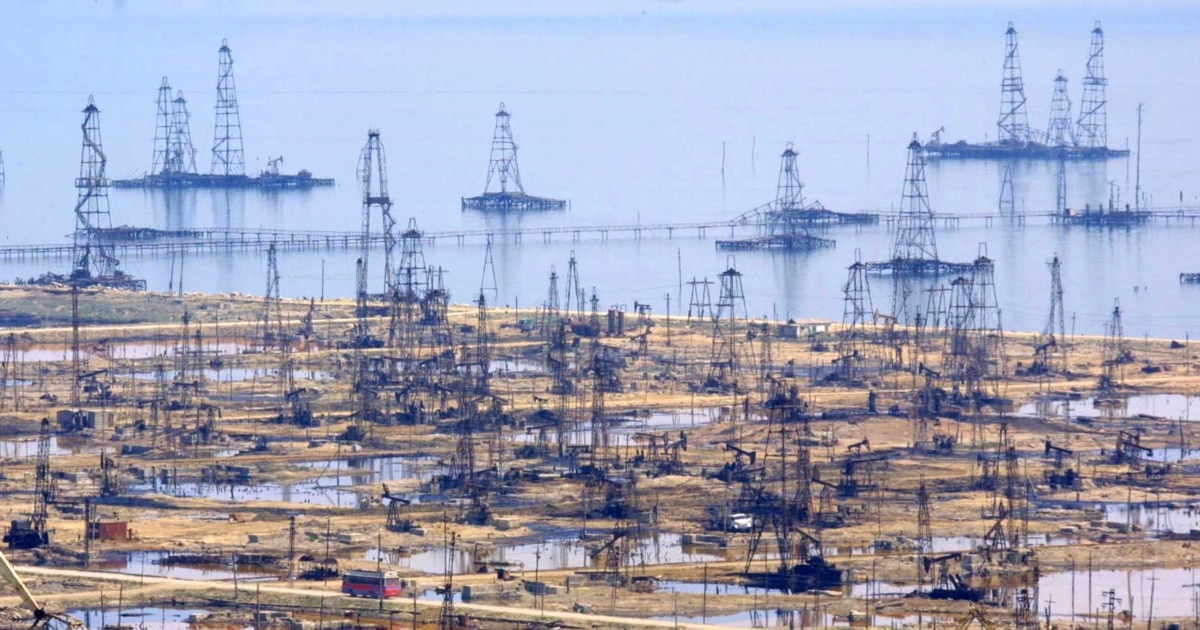
ABSHERON PENINSULA · SOVIET-ERA OILFIELDS · CASPIAN SEA
IPXCOM SOLUTION
Built from the Ground Up
Power & Grid Restoration
Installed generators and rebuilt electrical wiring systems stripped by departing Soviet forces. Delivered stable power to oilfield sites operating through harsh Caucasus winters — enabling continuous operations where none had existed.
VSAT & Communications
Deployed VSAT ground stations in remote oilfields across Azerbaijan and Georgia. Established integrated voice and data networks enabling VOIP communications between Baku, Tbilisi, London, and Houston — the first real-time cross-continental collaboration in the region.
Legacy Data Digitisation
Built rapid digitisation workflows to convert vast Soviet-era paper archives — well logs, seismic records, geological maps, cross-sections — into digital formats. Technical teams could access and analyse subsurface data for the first time, accelerating decision-making across the corridor.
Policies, Procedures & Safety
Developed standardised operational policies and safety procedures across all sites. Every system deployed was engineered for resilience and adaptability in an unpredictable, post-conflict environment — establishing the operational discipline that IPXCOM carries into every engagement today.
"The instability in the region — including the ongoing First Chechen War — created real security risks for foreign workers. We were assigned armed government protection that accompanied us daily."
IPXCOM PRINCIPAL · BAKU, AZERBAIJAN · 1996–2001
PROGRAMME TIMELINE
Five Years in the Caspian Corridor
THE IPXCOM PRINCIPLE
A Pattern That Has Never Changed
What was built in Azerbaijan and Georgia in 1996 were early versions of the connected, data-driven operations IPXCOM delivers today. The principles remain unchanged across 25 years and 100 countries: deploy rapidly, engineer for resilience, and deliver real-time intelligence wherever it is needed.
From the stripped power lines of post-Soviet Baku to the 248 CTBTO monitoring stations across 100 countries, to the Lagos State 767 emergency network serving 20 million people — the mission is always the same. Build infrastructure that works when nothing else does.
DOCUMENT REFERENCE